
Blog
Considering Surgery? How SoftWave Therapy Offers a Non-Surgical Alternative
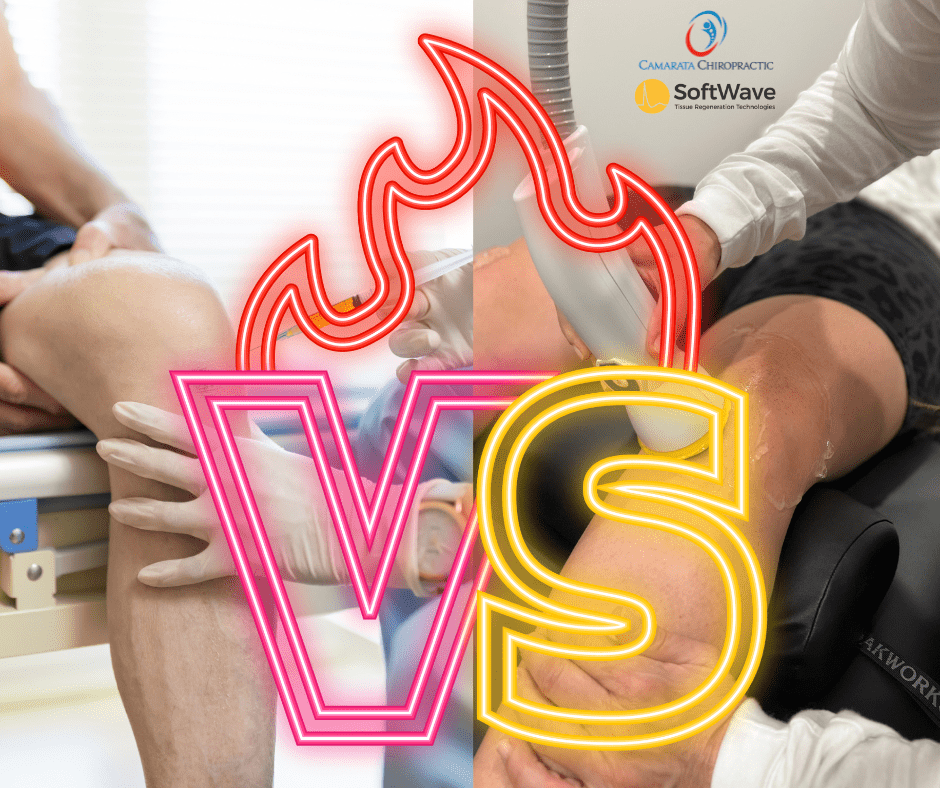
Considering Surgery in Rochester? Why Many People Explore a Non-Surgical Path First
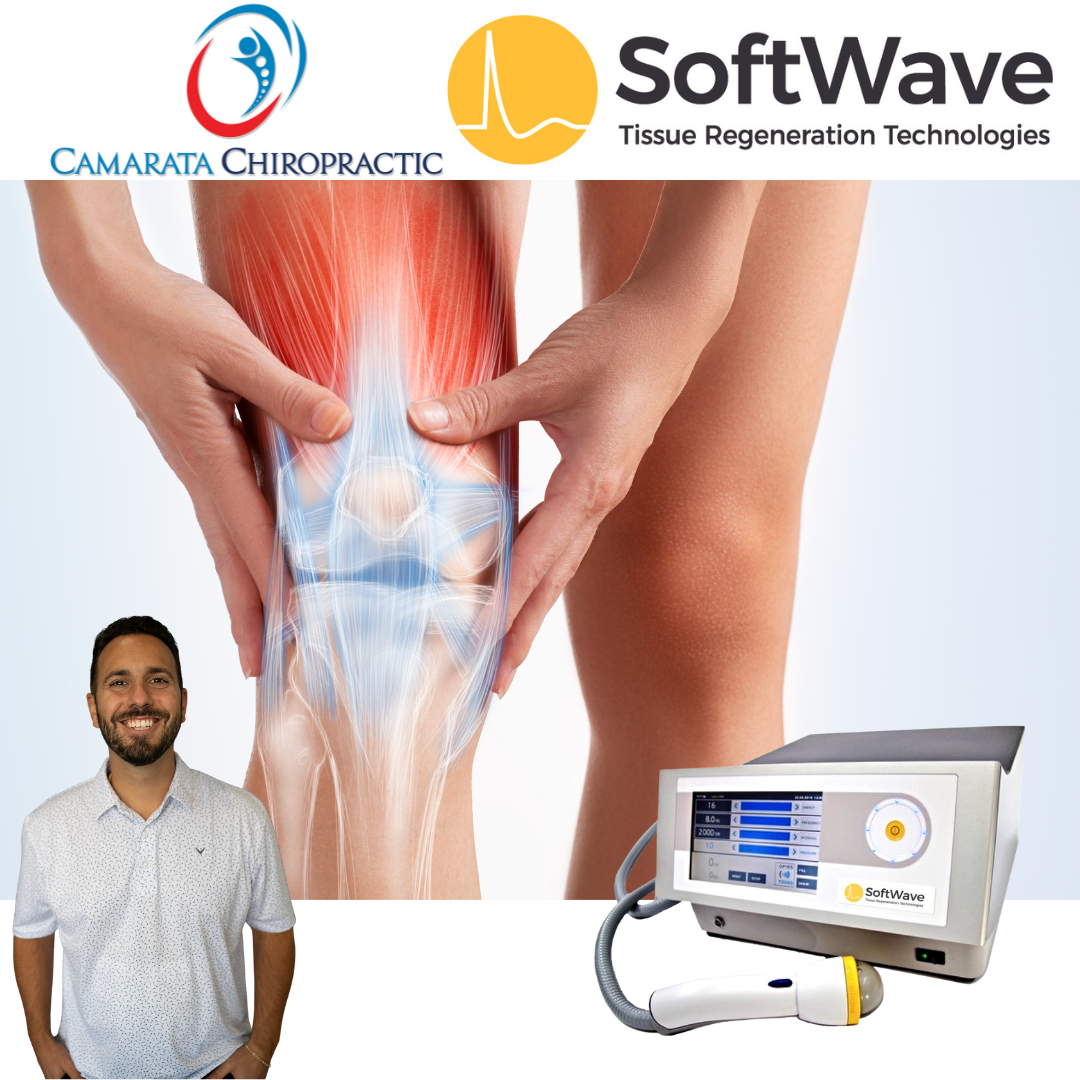
If you are living with a nagging shoulder, a cranky knee, chronic low back pain, or a stubborn tendon injury, someone may have already mentioned the word surgery. For many people in the Rochester area, that suggestion brings a knot to the stomach. Surgery can be the right answer for certain problems, but it is a big step, and it is fair to ask whether you have tried every reasonable option before committing to the operating room. At Camarata Chiropractic, Dr. Sam Camarata helps patients across North Chili and greater Rochester weigh their choices and consider conservative, non-invasive care first. One of the tools he offers is SoftWave TRT, a regenerative therapy designed to support the body's own healing for many soft-tissue and joint conditions.
This article is not anti-surgery. It is pro-information. The goal is to help you understand the trade-offs of surgery fairly, learn what a non-surgical option like SoftWave Therapy actually does, and have a more confident conversation with your own providers about the order in which to try things.
The Honest Trade-Offs of Surgery
Surgery has saved countless people from pain and disability, and for some conditions it is clearly the best path. At the same time, every surgical procedure carries real considerations that deserve an honest look before you decide.
- Inherent risk. Any procedure that involves anesthesia and incisions carries some risk of infection, blood clots, nerve irritation, and reactions to medication. These risks are often low, but they are never zero.
- Recovery and downtime. Depending on the operation, recovery can mean weeks or months of limited activity, time away from work, and a course of physical rehabilitation. For an active person or someone who is self-employed, that downtime has a real cost.
- No guaranteed outcome. Surgery can address a structural problem, but it does not always resolve pain, and some people need revision procedures later. Results vary from person to person.
- It is difficult to undo. Once tissue is cut or a joint is altered, you cannot go back to the starting point. That is one reason many clinicians encourage patients to exhaust conservative care first when it is medically reasonable to do so.
None of this means you should avoid surgery when you truly need it. It means that for many common musculoskeletal complaints, it is worth exploring less invasive options before choosing the most invasive one.
Where a Conservative Approach Fits
Plenty of soft-tissue and joint problems respond well to non-surgical care, especially when they are addressed thoughtfully and consistently. Think of chronic tendon pain, plantar issues, aching knees, shoulder discomfort, hip pain, and lingering strains that never quite healed. For these kinds of conditions, a conservative plan aims to reduce pain, restore function, and support the tissue so that the body can do more of the repair work itself.
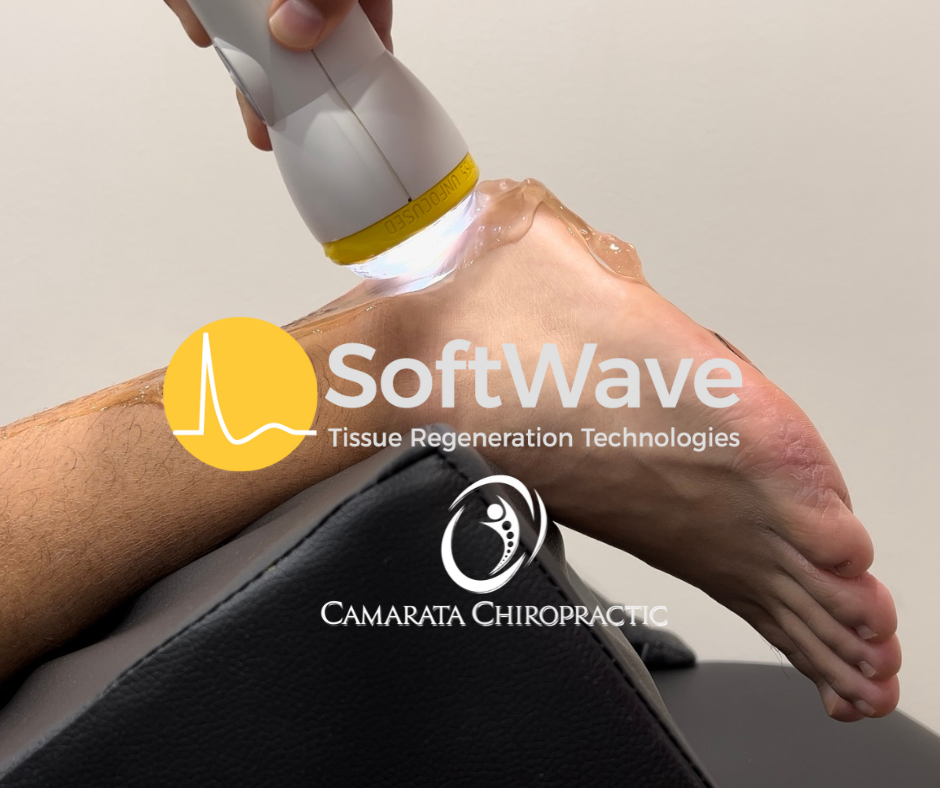
SoftWave TRT is one part of that conservative toolkit. It is non-invasive, involves no needles, no drugs, and no surgery, and it requires no downtime afterward. That combination is exactly why so many people ask about it when they are trying to avoid or delay an operation.
How SoftWave Therapy Works
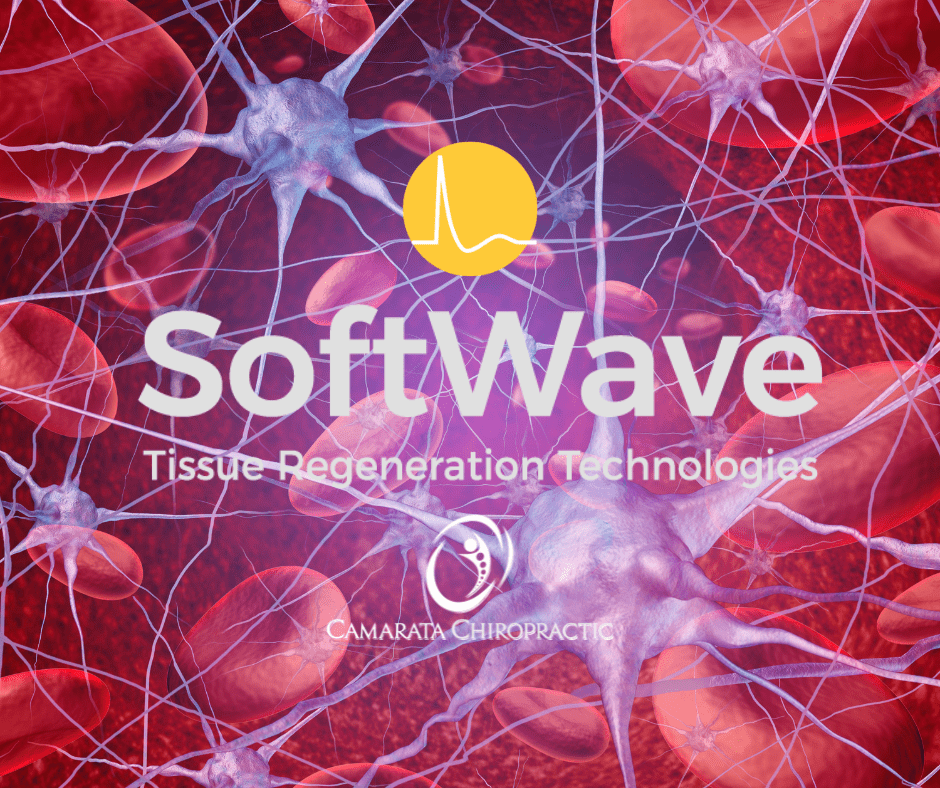
SoftWave TRT uses electrohydraulic, spark-generated acoustic waves that are broad-focused through a patented parabolic reflector. This design makes it different from radial, electromagnetic, and piezoelectric devices. It is the only broad-focused shockwave technology, and it is built to penetrate deep into tissue and trigger the body's natural healing cascade rather than simply masking symptoms.
In plain language, the therapy is designed to wake up and support the biological processes your body already uses to repair itself. Here is what researchers describe happening at the cellular level.
- Resident stem cell activation. The waves are designed to activate and encourage the migration of your own resident stem cells toward areas that need repair.
- New blood flow (angiogenesis). Through signals such as VEGF and eNOS, the therapy supports the formation of new blood vessels, which can bring circulation to areas that have struggled to heal.
- Cell proliferation and collagen. Markers like PCNA and BMP are associated with cell proliferation and collagen production, both important for rebuilding healthy tissue.
- Calmer inflammation. The therapy is designed to help modulate inflammation and regulate toll-like receptors involved in the healing response.
- Clearing out old cells. It may also help with the clearance of senescent cells, the worn-out cells that can slow recovery.
Because these are biological processes, healing does not stop the moment you leave the office. Many patients find that improvement continues for weeks and even months after their final session as the body keeps responding.
What to Expect at Camarata Chiropractic
One of the appealing things about SoftWave Therapy is how simple the sessions are. Each appointment typically takes only about 10 to 15 minutes. Most people go through a series of sessions over roughly 6 to 8 weeks, and there is no recovery period afterward, so you can head right back to your day. There are no incisions to protect, no stitches, and no missed work while you heal from a procedure.
Dr. Camarata evaluates each person individually to determine whether SoftWave is an appropriate fit and how it might work alongside the rest of your care. SoftWave TRT is FDA-cleared for the activation of connective tissue, a temporary increase in blood flow, and the temporary relief of minor muscle and joint pain, and many patients report meaningful improvement in how they feel and function. The technology has been studied at leading institutions and is used by clinicians who work with professional and collegiate athletes, which speaks to why it has earned a place in conservative care.
Ready to see if SoftWave Therapy is right for you? Request your SoftWave Discovery Day in Rochester today.
Surgery First or Surgery Later? Make It an Informed Choice
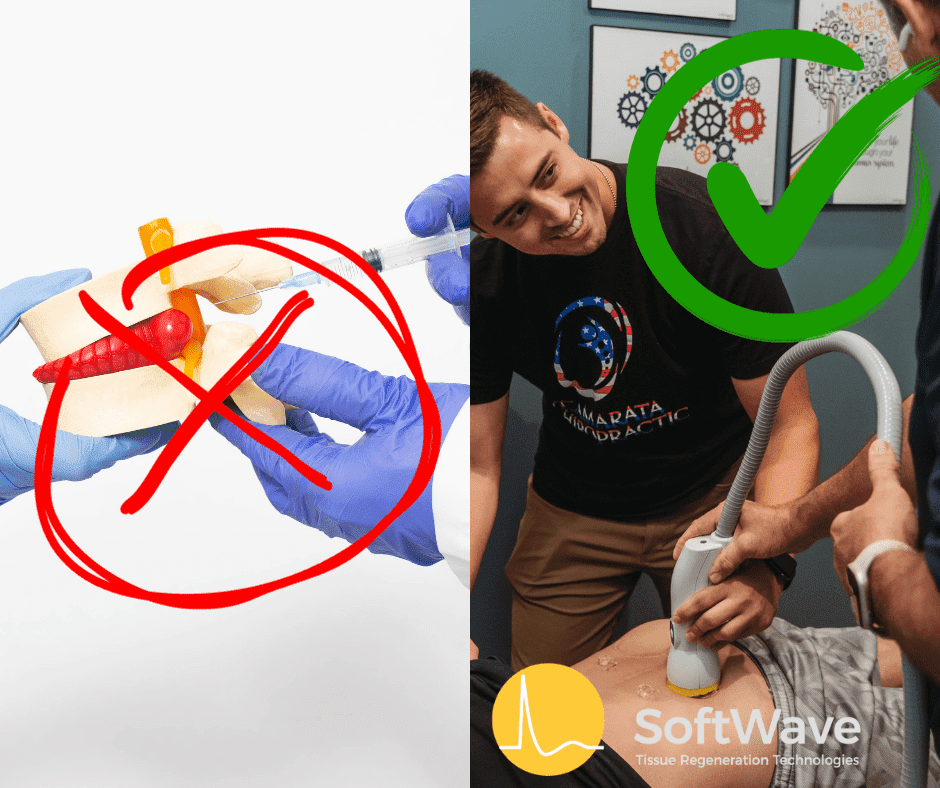
The most sensible way to think about all of this is not surgery versus no surgery, but rather what order makes sense for your situation. For many soft-tissue and joint conditions, it is reasonable to explore a conservative, non-invasive option before choosing an irreversible procedure. If a therapy like SoftWave helps, you may be able to avoid or postpone surgery. If it does not fully resolve the problem, you have lost very little, since there is no downtime and no cutting involved, and surgery remains on the table.
Some cases genuinely do require surgical repair, and that decision should always be made in consultation with your own medical providers. What SoftWave offers is a responsible first step to consider when your condition is a candidate for conservative care. It is a way to give your body a real chance to heal before you take a more permanent path.
Ready to Take the Next Step?
If you are weighing surgery for a musculoskeletal problem in the Rochester area, it is worth learning whether a non-invasive option belongs earlier in your plan. Dr. Camarata can help you understand your choices so you can decide with confidence.
Request your SoftWave Therapy new patient visit online today
Contact Camarata Chiropractic
Camarata Chiropractic
3237 Union St
North Chili, NY 14514
Phone: 585-617-4145
Our Main Office Website: https://www.camaratachiropractic.com
‹ Back