
Blog
SoftWave Therapy vs. PRP Injections: Which Regenerative Option Is Right for You?
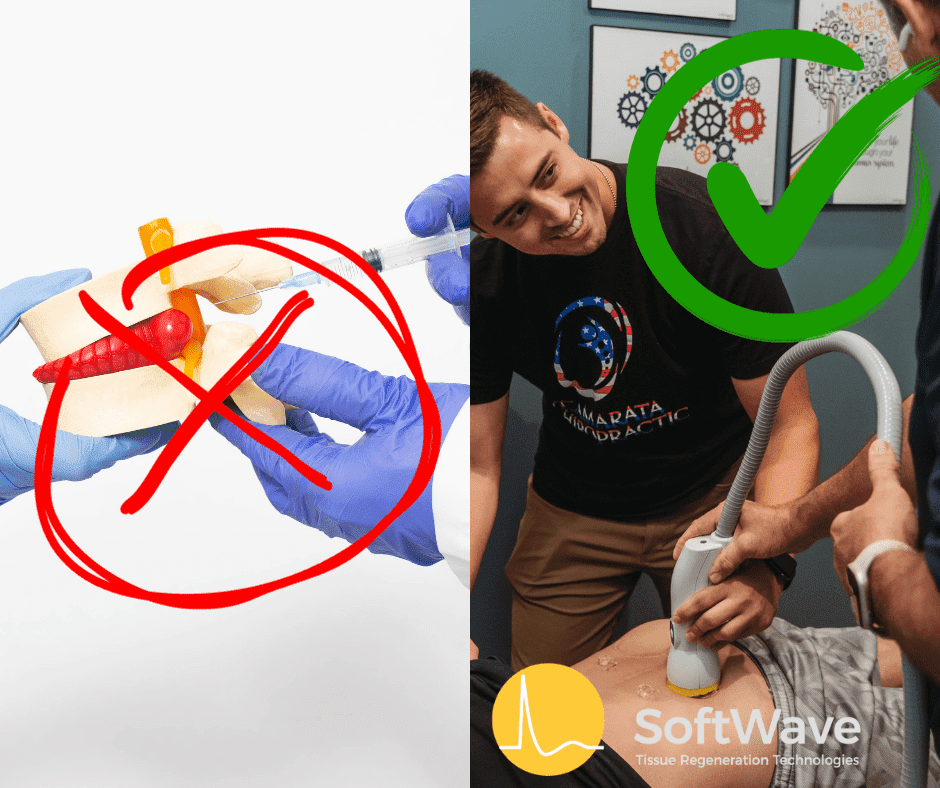
SoftWave Therapy vs. PRP Injections: Which Regenerative Option Is Right for You in Rochester?
If you have been researching regenerative options for a nagging joint, tendon, or soft-tissue problem, you have probably run into two names again and again: platelet-rich plasma (PRP) injections and SoftWave Tissue Regeneration Technology (TRT). Both fall under the broad umbrella of regenerative care, and both aim to support the body's own repair systems rather than simply mask pain. At Camarata Chiropractic in North Chili, a Rochester, NY suburb, Dr. Sam Camarata helps patients understand the real differences so they can choose the path that fits their goals, their comfort level, and their schedule. This article offers a fair, side-by-side look at both approaches.
What Are PRP Injections?
PRP, or platelet-rich plasma, is a treatment that uses a concentrated portion of your own blood. The process typically begins with a blood draw, much like the one you would have during routine lab work. That blood is then placed in a centrifuge, which spins it at high speed to separate the platelets and plasma from the red blood cells. Platelets carry growth factors that play a role in tissue repair, so the goal is to concentrate them and then inject that solution directly into the area of concern, such as a knee, shoulder, elbow, or tendon.
PRP has been used across sports medicine, orthopedics, and some chiropractic and regenerative practices for a number of years. Many patients are drawn to it because the material comes from their own body rather than from an outside source. It is a legitimate, well-established approach, and for the right person under the right clinician it can be a reasonable choice. The point here is not to dismiss PRP. It is simply to help you compare it clearly against a different kind of tool.
Things to Understand About PRP
Because PRP is needle-based, the experience involves a blood draw and one or more injections. Some patients feel soreness at the injection site afterward, and depending on the protocol there may be a short period of reduced activity while the area settles. Results and the number of injections can vary from person to person and from clinic to clinic. As with any injection-based procedure, it is important to have a thorough conversation with the provider about what to expect for your specific condition.
What Is SoftWave TRT?
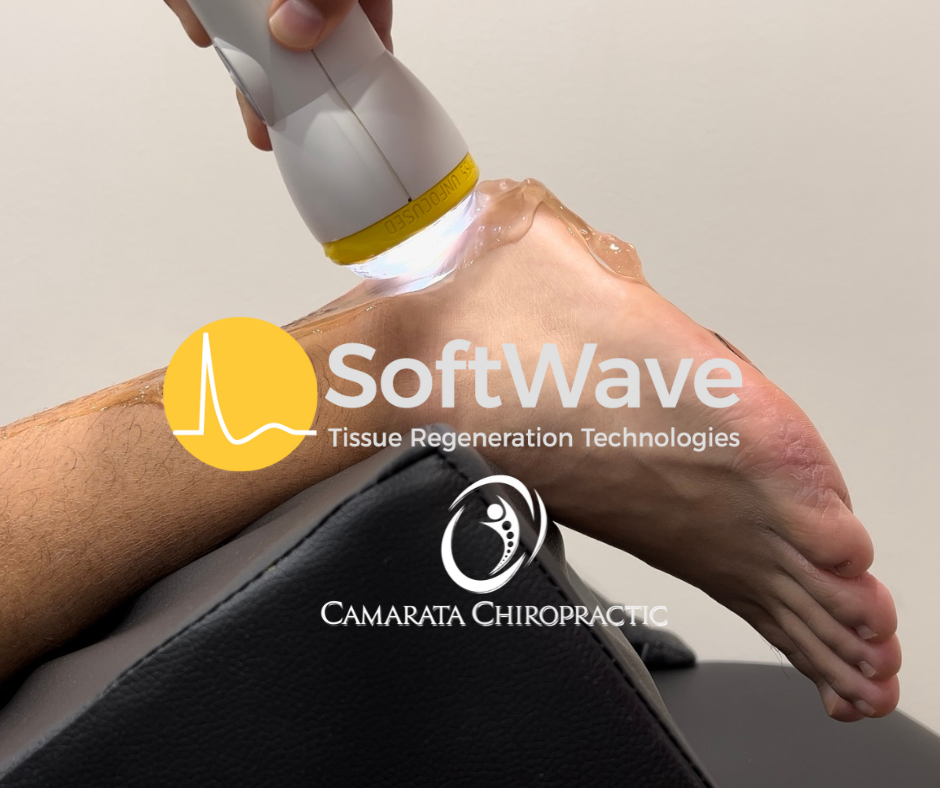
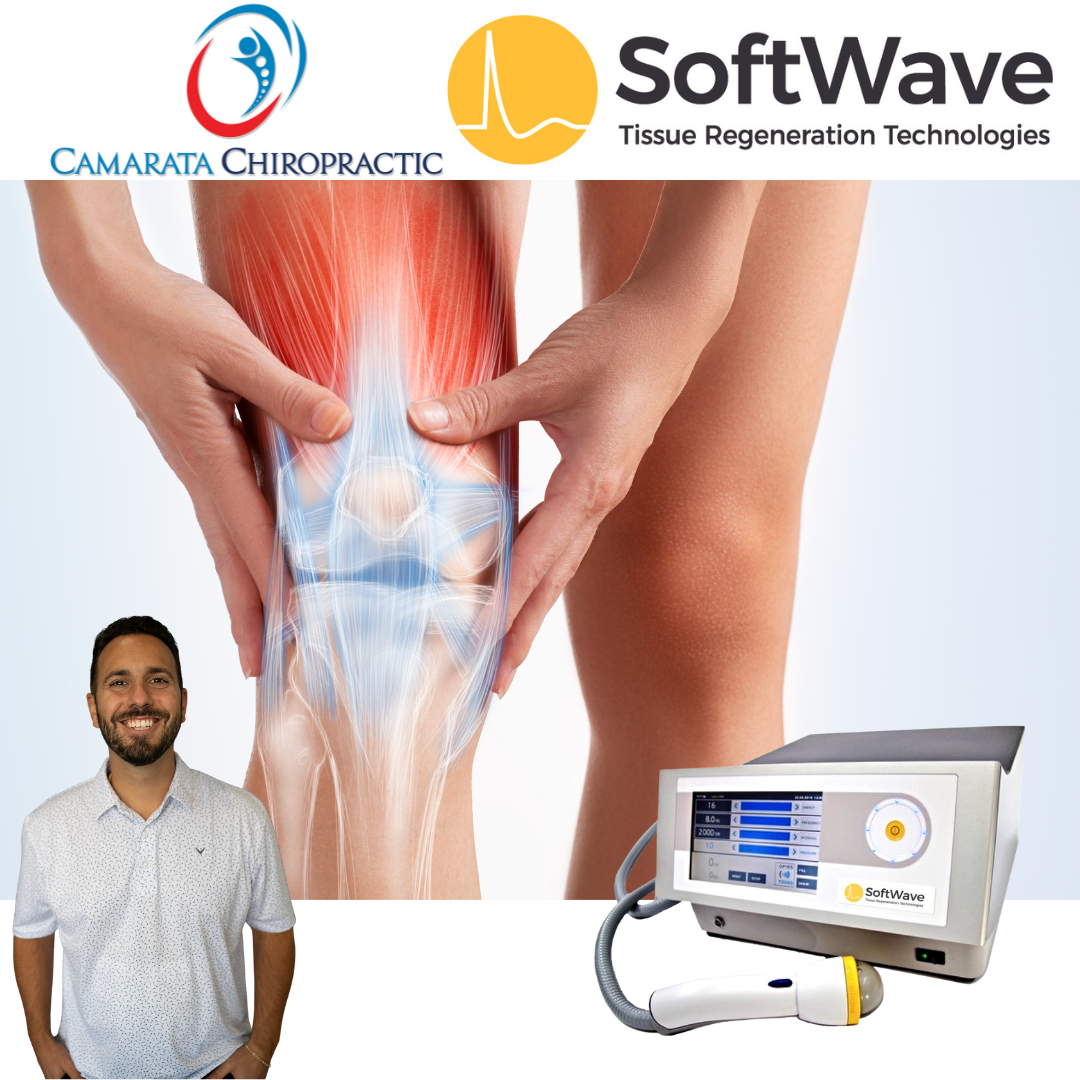
SoftWave TRT takes a very different route to a similar destination. Instead of drawing blood and injecting anything, SoftWave delivers electrohydraulic, spark-generated broad-focused acoustic waves into the tissue through a patented parabolic reflector. It is the only broad-focused shockwave technology, which sets it apart from radial, electromagnetic, and piezoelectric devices. Those acoustic waves penetrate deep into the treatment area and are designed to trigger the body's natural healing cascade from the inside, without a single needle.
The experience is straightforward. There are no needles, no drugs, no surgery, and no downtime. A typical session runs about 10 to 15 minutes, and most people return to their normal day right afterward. SoftWave is delivered as a series, usually spread across roughly 6 to 8 weeks, and the healing response it stimulates can continue to develop for weeks to months after the final session.
How SoftWave Helps
Rather than adding concentrated platelets from outside, SoftWave is designed to wake up the repair processes that already live in your tissue. In plain language, here is what the technology is designed to support:
- Resident stem cell activation: encouraging the body's own repair cells to activate and migrate toward the treated area.
- Angiogenesis (new blood vessels): supporting circulation through signaling molecules such as VEGF and eNOS.
- Cell proliferation and collagen: promoting factors like PCNA and BMP that are involved in building and repairing tissue.
- Inflammation modulation: helping the body regulate its inflammatory response.
- Toll-like receptor regulation: influencing signaling tied to healing.
- Clearance of senescent cells: helping the body clear out older, non-productive cells so healthier tissue can respond.
SoftWave is FDA-cleared for the activation of connective tissue, a temporary increase in blood flow, temporary relief of minor muscle and joint pain, treatment of chronic diabetic foot ulcers, and treatment of acute second-degree burns. The technology has been studied at leading institutions and is used by clinicians who work with professional and collegiate athletes.
Side-by-Side: The Practical Differences
When patients ask Dr. Camarata how to think about the two, the conversation usually comes down to a few practical points.
Invasive vs. Non-Invasive
This is the biggest difference. PRP is needle-based and requires a blood draw followed by injections. SoftWave is completely non-invasive: no blood draw, no needles, and nothing injected into the body. For patients who are needle-averse or who simply prefer to avoid an injection procedure, that distinction matters a great deal.
Downtime and Convenience
PRP may involve some post-injection soreness and, in some protocols, a short period of modified activity. SoftWave sessions are quick, and most patients walk out and carry on with their day. For busy Rochester-area professionals, parents, and active adults, a 10 to 15 minute appointment with no downtime is easy to fit into real life.
Single Procedure vs. Series
PRP is often delivered as one or a small number of injections. SoftWave is intentionally series-based, delivered over roughly 6 to 8 weeks so the healing response can build progressively. Neither approach is automatically better; they simply reflect two different philosophies of stimulating repair.
Can They Work Together?
These two options are not necessarily an either-or decision. Because SoftWave is non-invasive and drug-free, some patients view it as a first step to try before considering injections, and others explore it as a complement alongside other care. The right sequence depends on your condition, your history, and a professional evaluation. This is exactly the kind of question worth talking through with a provider rather than deciding on your own.
Ready to see if SoftWave Therapy is right for you? Request your SoftWave Discovery Day in Rochester today.
Which Option Is Right for You?
There is no one-size-fits-all answer, and anyone who promises a guaranteed outcome should be viewed with caution. PRP is an established, legitimate approach that many patients choose. SoftWave TRT offers a non-invasive, needle-free alternative or complement, with short sessions, no downtime, and a mechanism designed to activate your body's own healing systems. The best choice is the one that matches your goals, your comfort with needles, your schedule, and a thorough evaluation of your specific situation. None of this replaces personalized medical advice from a qualified provider who has examined you.
If you live in the Rochester, NY area and want to understand your regenerative options without pressure, a conversation is the best place to start. Dr. Sam Camarata and the team at Camarata Chiropractic will listen to your history, assess your condition, and explain honestly whether SoftWave is a good fit for you.
Ready to Take the Next Step?
If you are weighing SoftWave Therapy against PRP injections and want a clear, honest look at which path fits your body and your goals, the Camarata Chiropractic team is here to help you decide with confidence.
Request your SoftWave Therapy new patient visit online today
Contact Camarata Chiropractic
Camarata Chiropractic
3237 Union St
North Chili, NY 14514
Phone: 585-617-4145
Our Main Office Website: https://www.camaratachiropractic.com
‹ Back