
Blog
The Science of Angiogenesis: How SoftWave Therapy Boosts Blood Flow to Heal Tissue
Why Blood Flow Is the Hidden Key to Healing in Rochester, NY
When an injury lingers for months, most people assume the problem is the tissue itself. In many cases, though, the real bottleneck is circulation. Damaged tendons, joints, and muscles heal slowly when they cannot get enough oxygen and nutrients, and that supply line depends entirely on blood flow. At Camarata Chiropractic in Rochester, NY, Dr. Sam Camarata helps patients understand that stubborn pain is often a circulation story as much as a structural one. That is where SoftWave TRT comes in, a non-invasive therapy designed to help the body build new blood vessels and restore the flow that healing requires.
This article is a plain-language explainer on angiogenesis, the formation of new blood vessels, and why it matters so much for tissue repair. We will keep the science accessible and tie it directly to how SoftWave Therapy is thought to work.
What Is Angiogenesis, and Why Should You Care?
Angiogenesis is the biological process by which your body grows new blood vessels from existing ones. It sounds abstract, but it happens throughout your life. It is how a healing wound knits itself back together, how muscles adapt to exercise, and how tissue recovers after strain. Without new vessels reaching into a damaged area, repair simply stalls.
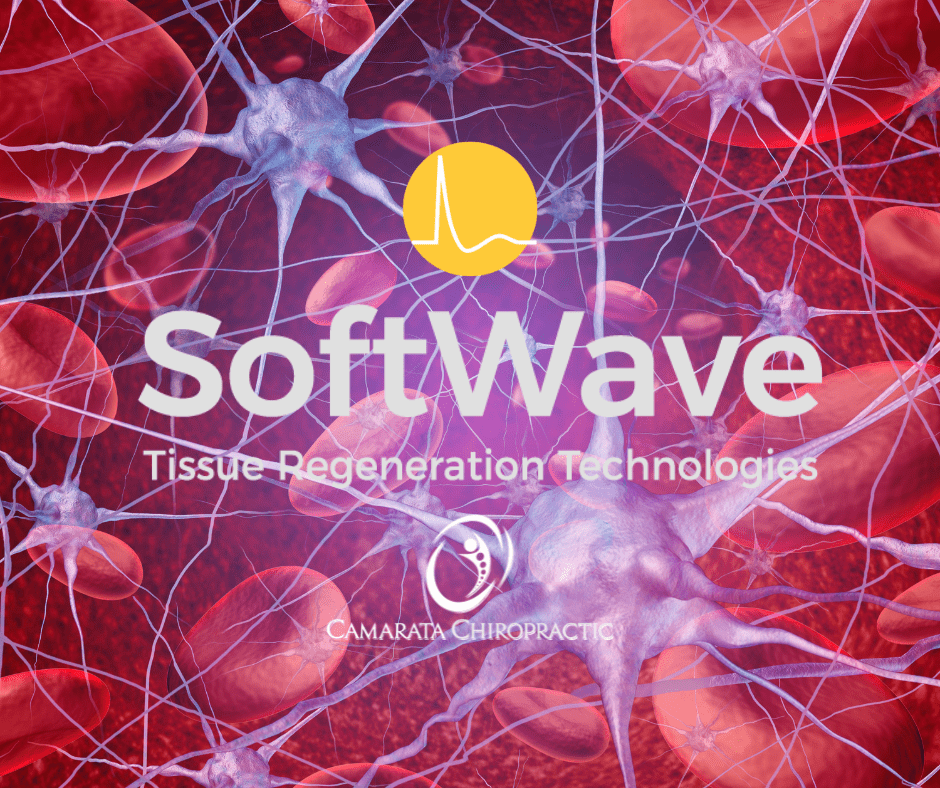
Think of your circulatory system as a road network. Your arteries and veins are the highways, but the smallest roads, the capillaries, are where the real delivery happens. Capillaries are so thin that red blood cells pass through nearly single file, handing off oxygen and nutrients to individual cells and carrying away waste. When tissue is injured, its local road network is often disrupted or simply too sparse to support fast repair. Angiogenesis lays down new capillaries so supplies can reach the cells that need them.
Why Blood Flow Matters So Much for Repair
Every cell involved in healing has a job, and every job requires fuel. Oxygen powers the energy production inside cells. Amino acids and other nutrients become the raw material for new collagen and tissue. Immune cells travel through the bloodstream to clear debris and manage inflammation. Even the signals that coordinate repair move through the circulation. When blood flow is poor, all of these processes slow down at once. This is one reason areas with naturally limited circulation, such as certain tendons and ligaments, are notorious for healing at a frustrating pace.
Restore the flow, and you restore the delivery system that repair depends on. That is the simple idea at the heart of why circulation matters, and it is why a therapy that encourages new vessel growth can be so meaningful for people dealing with chronic aches and slow-healing injuries.
The Molecular Signals Behind New Blood Vessels
Your body does not grow blood vessels randomly. It responds to specific chemical signals that tell cells when and where to build. Two of the most important players are worth knowing by name, because they are central to how SoftWave Therapy is understood to work.
VEGF stands for vascular endothelial growth factor. It is one of the body's primary signals for angiogenesis. When tissue needs more blood supply, VEGF acts like a construction order, prompting the cells that line your blood vessels to multiply and organize into new capillaries. More VEGF activity generally means more encouragement for fresh vessel growth in the areas that need it.
eNOS stands for endothelial nitric oxide synthase. This is the enzyme that helps produce nitric oxide, a small but powerful molecule that signals blood vessels to relax and widen. Wider, more responsive vessels mean better flow. eNOS activity supports both the immediate improvement of circulation and the longer-term process of building healthy new vessels.
Together, VEGF and eNOS represent two sides of the same goal: opening up existing flow and constructing new pathways so oxygen and nutrients reach injured tissue.
How SoftWave Therapy Fits Into This Picture
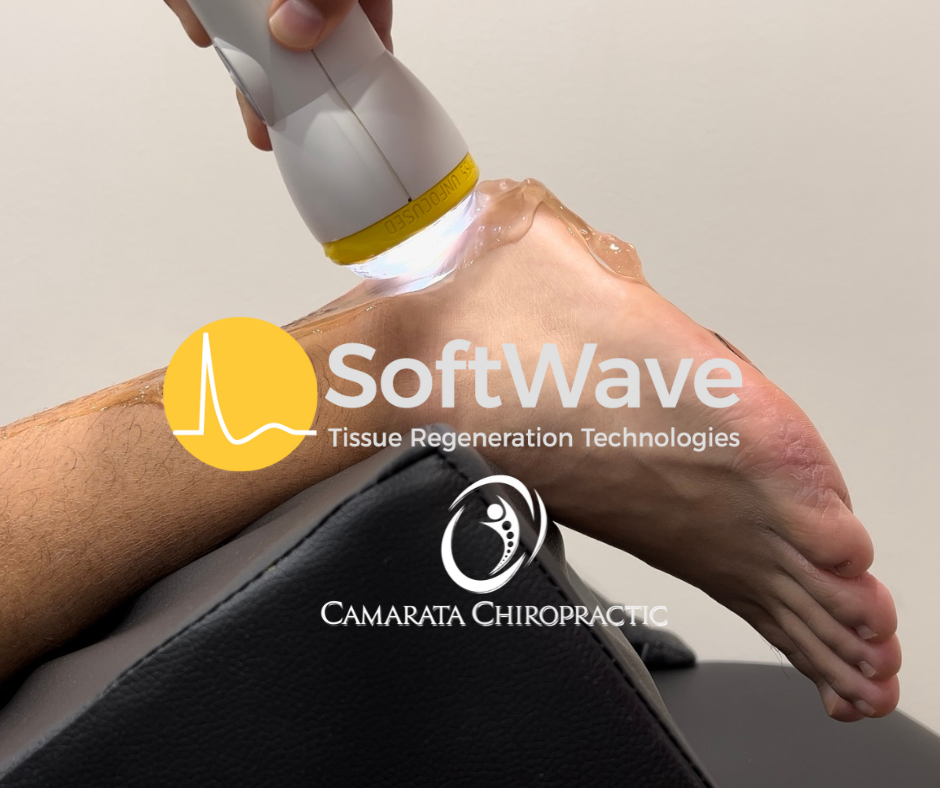
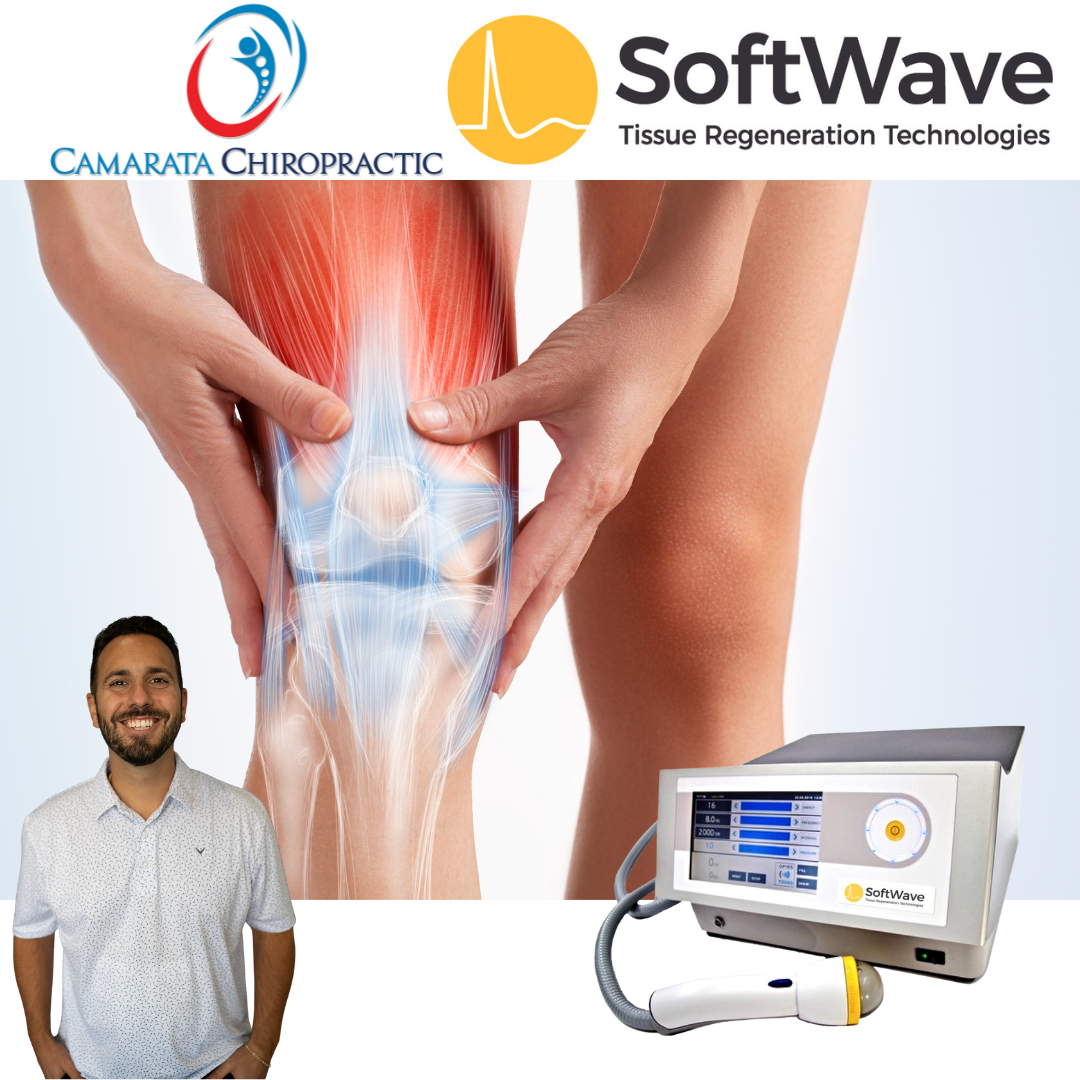
SoftWave TRT uses electrohydraulic, spark-generated acoustic waves that are broad-focused through a patented parabolic reflector. In plain terms, a controlled spark creates an energetic sound wave that spreads out and penetrates deep into tissue rather than concentrating on a single tiny point. SoftWave is the only broad-focused shockwave technology, which sets it apart from radial, electromagnetic, and piezoelectric devices.
As these waves move through the body, they are designed to mechanically stimulate cells and trigger the body's natural healing cascade. Part of that cascade involves the very signals we just discussed. SoftWave Therapy is thought to encourage angiogenesis through pathways involving VEGF and eNOS, supporting both the widening of existing vessels and the growth of new ones. Importantly, a temporary increase in blood flow is one of the therapy's FDA-cleared uses, so the circulation benefit is grounded in recognized clearances rather than guesswork.
The Science in Simple Terms
- New vessel growth (angiogenesis): the therapy is designed to help stimulate VEGF activity, which encourages the formation of new capillaries in areas that need better supply.
- Better flow through existing vessels: by supporting eNOS and nitric oxide, SoftWave may help vessels relax and widen for improved circulation.
- More oxygen and nutrients delivered: improved flow means the cells doing the repair work get more of the fuel and building blocks they need.
- Support for the wider healing cascade: beyond circulation, SoftWave is also associated with activating the body's own resident stem cells and modulating inflammation, which work alongside better blood flow.
None of this is a magic switch. It is a way of nudging the body's own repair machinery, and results build gradually as circulation and tissue quality improve.
Ready to see if SoftWave Therapy is right for you? Request your SoftWave Discovery Day in Rochester today.
What to Expect From SoftWave Sessions
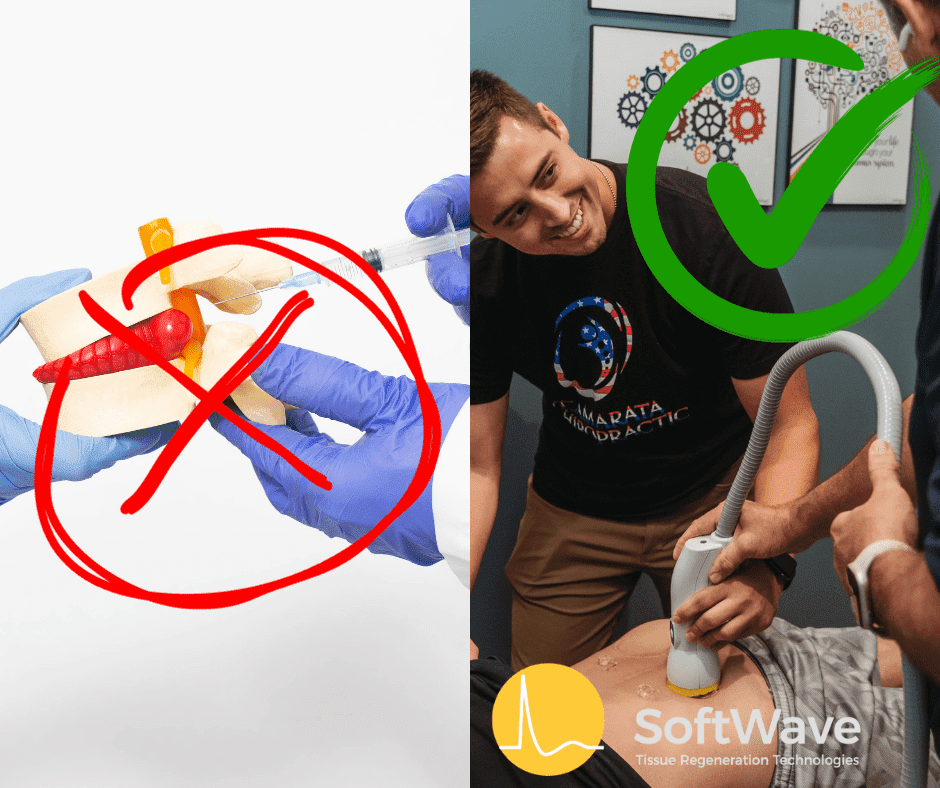
One of the reasons patients appreciate this approach is how straightforward it is. SoftWave Therapy is non-invasive, with no needles, no drugs, no surgery, and no downtime. Each session typically lasts about 10 to 15 minutes, and most people go through a series of treatments over roughly 6 to 8 weeks. Because the therapy works by encouraging the body's own processes, healing often continues for weeks to months after the final session, as new vessels mature and tissue quality improves.
SoftWave technology has been studied at leading institutions and is used by clinicians who work with professional and collegiate athletes, which speaks to its growing acceptance among people who depend on their bodies performing well. That said, every person is different. Many patients report meaningful improvement, and SoftWave may help support the healing process, but it is not a guaranteed cure and it does not replace the guidance of your healthcare provider.
Is Circulation the Missing Piece for You?
If you have been dealing with a nagging injury or persistent joint and muscle discomfort that just will not resolve, it is worth asking whether poor blood flow is part of the story. Restoring circulation gives your tissue the resources it has been missing, and SoftWave Therapy is designed to help make that happen. Dr. Sam Camarata can help you understand whether this drug-free approach makes sense for your situation.
Ready to Take the Next Step?
If slow healing has kept you sidelined, better blood flow may be exactly what your tissue needs, and SoftWave Therapy in Rochester is designed to help support that process naturally. Take the first step toward getting your circulation, and your recovery, moving again.
Request your SoftWave Therapy new patient visit online today
Contact Camarata Chiropractic
Camarata Chiropractic
3237 Union St
North Chili, NY 14514
Phone: 585-617-4145
Our Main Office Website: https://www.camaratachiropractic.com
‹ Back