
Blog
Is SoftWave Therapy Right for You? A Rochester Guide to Candidacy
Is SoftWave Therapy Right for You? A Rochester Guide to Candidacy
If you have been living with pain that will not quite go away, you have probably asked yourself a simple question: is there something out there that could actually help me heal, without surgery and without another round of medication? Here in Rochester, NY, more and more people are asking that question about SoftWave Therapy. At Camarata Chiropractic, Dr. Sam Camarata works with patients across the greater Rochester area who want a non-invasive, drug-free path to feeling better. This guide is designed to help you self-assess, in an honest way, whether SoftWave TRT might be a good fit for your situation, and where a professional evaluation comes in.
What SoftWave Therapy Actually Is
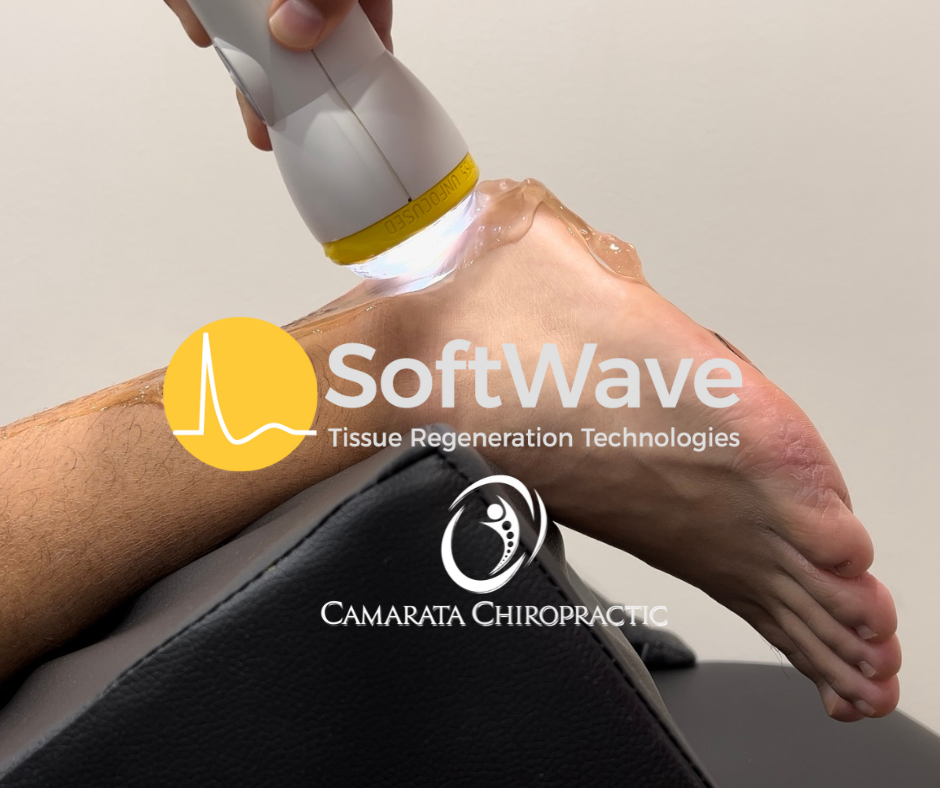
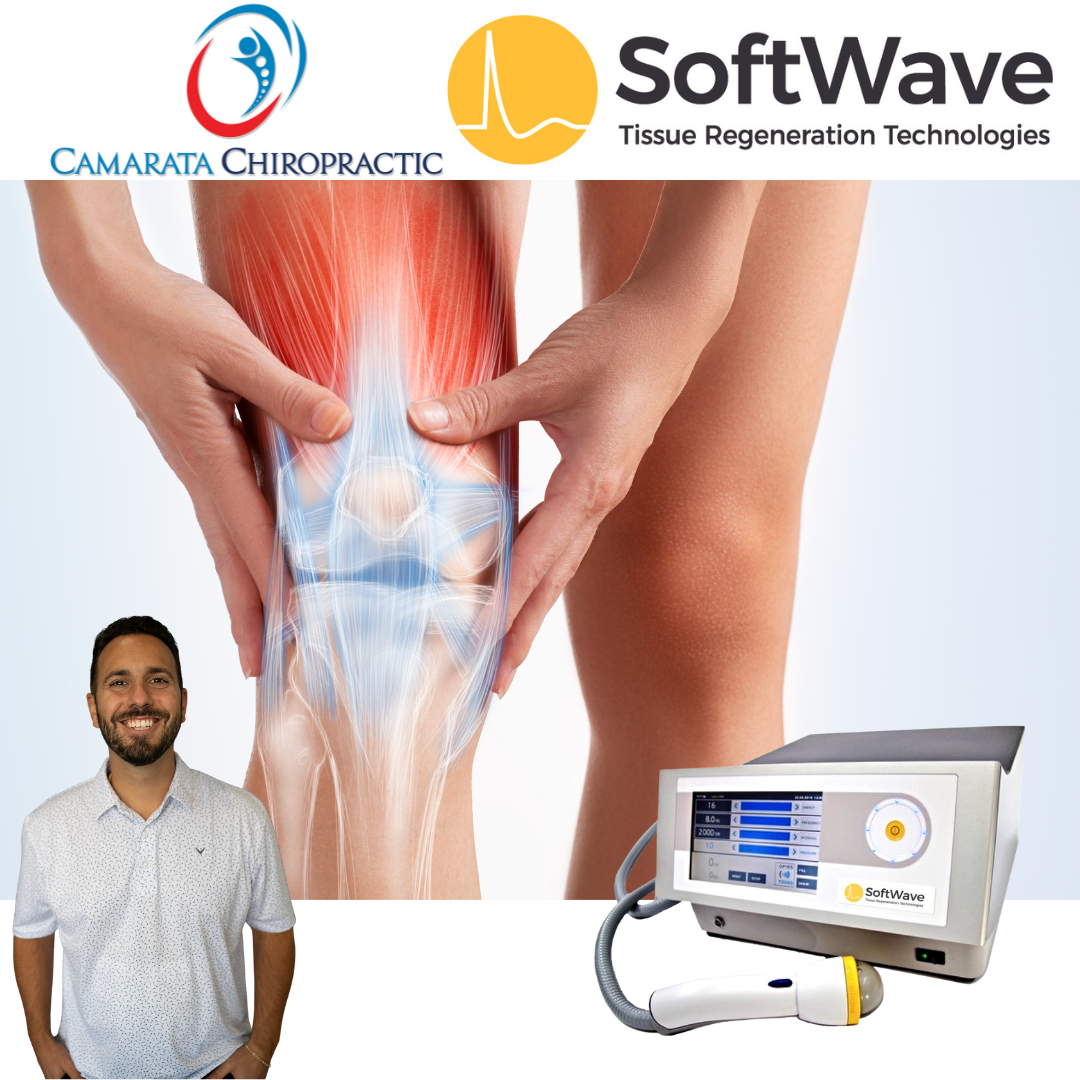
SoftWave TRT is a form of regenerative therapy that uses electrohydraulic, spark-generated acoustic waves. Unlike other shockwave devices on the market, SoftWave produces broad-focused waves through a patented parabolic reflector. It is the only broad-focused shockwave technology, as opposed to the radial, electromagnetic, or piezoelectric approaches you may have read about. In plain terms, the waves spread through a wider and deeper area of tissue, and they are designed to trigger the body's own natural healing response.
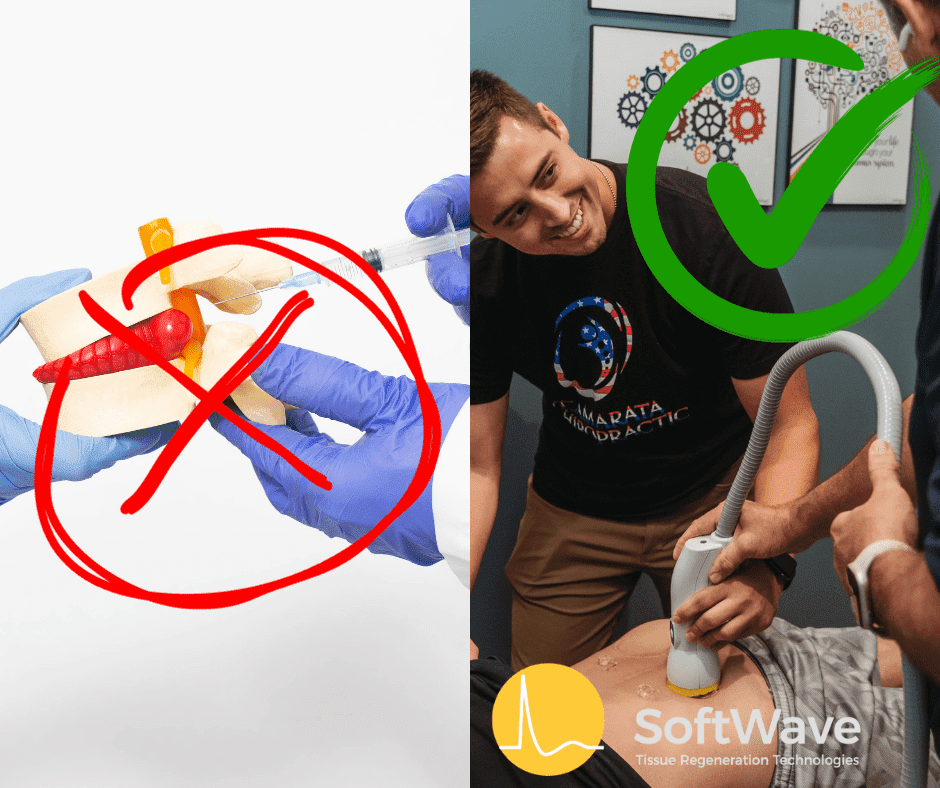
The experience itself is gentle and straightforward. There are no needles, no drugs, no surgery, and no downtime afterward. A typical session runs about 10 to 15 minutes, and most treatment plans involve a series of sessions spread over roughly 6 to 8 weeks. One point that surprises many patients: your body often keeps responding for weeks or even months after your final session, because the therapy is working with your biology rather than simply masking a symptom.
Who Tends to Be a Good Candidate
No single article can tell you for certain whether SoftWave is right for you, and you should be skeptical of anyone who promises otherwise. That said, there are patterns. Certain kinds of people tend to be strong candidates, and recognizing yourself in these descriptions is a good reason to look into a consultation.
People with chronic musculoskeletal pain
If you have had nagging pain in a joint, muscle, tendon, or soft tissue for months, and it has not resolved with rest or ordinary care, you fall into the group most people picture when they think of SoftWave. Chronic pain that lingers often reflects tissue that has stalled partway through healing, and the therapy is designed to help nudge that process forward.
People with slow-healing or stubborn injuries
Some injuries simply take their time. An old shoulder problem, a cranky knee, or a tendon issue that flares every time you get active can wear on your patience. If you feel like your body has hit a plateau and stopped making progress, you may be a candidate for a therapy that focuses on the underlying tissue rather than the pain signal alone.
People who want to avoid surgery or long-term medication
Many of the Rochester patients Dr. Camarata sees are motivated by what they want to avoid. They would rather not schedule a surgery if a conservative option is reasonable. They would rather not depend on pain relievers month after month. Because SoftWave is non-invasive and drug-free, it appeals to people who want to explore other avenues first, ideally alongside guidance from their own physician.
Active adults, weekend athletes, and people who simply want to move again
You do not have to be an athlete to benefit, but people who want to stay active often find value here. SoftWave technology has been studied at leading institutions and is used by clinicians who work with professional and collegiate athletes. For a busy adult who just wants to walk the Erie Canal path, keep up with the grandkids, or get through a workday without wincing, that same technology may be worth a conversation.
Conditions It Is Commonly Used For
SoftWave is used for a range of musculoskeletal complaints. While your specific case has to be evaluated individually, people commonly ask about it for concerns such as these:
- Chronic neck and back discomfort
- Shoulder pain, including issues around the rotator cuff area
- Knee pain and general joint aches
- Hip and gluteal pain
- Elbow complaints such as tennis or golfer's elbow
- Plantar fasciitis and foot or heel pain
- Achilles and other tendon-related problems
- Soft-tissue injuries that have been slow to recover
It is worth noting that SoftWave is FDA-cleared for the activation of connective tissue, a temporary increase in blood flow, and the temporary relief of minor muscle and joint pain, among other uses. Clearances describe what the device is authorized for, not a promise about your individual result.
How SoftWave Helps
The reason SoftWave draws so much interest is what happens beneath the surface. The acoustic waves penetrate deep into tissue and are designed to set off a cascade of biological activity. Here is the plain-language version of what researchers describe:
- Stem cell activation: the therapy is designed to stimulate the body's own resident stem cells and encourage them to migrate toward the treated area.
- New blood vessel growth: through signaling molecules like VEGF and eNOS, the process supports angiogenesis, which means improved circulation to tissue that needs it.
- Cell proliferation and repair: markers such as PCNA and BMP are associated with cell growth and collagen production, the building blocks of healthy tissue.
- Inflammation modulation: the therapy may help the body regulate its inflammatory response so healing can proceed.
- Cellular cleanup: it is also associated with toll-like receptor regulation and clearance of worn-out senescent cells.
None of this is a guarantee, and everyone's body responds differently. What it does explain is why the approach is regenerative in intent: it aims to help your body do more of the repair work it is already built to do.
Ready to see if SoftWave Therapy is right for you? Request your SoftWave Discovery Day in Rochester today.
The Honest Part: Only a Consultation Determines Fit
Here is the part that matters most. Reading a list of good-candidate traits can point you in the right direction, but it cannot examine you. Your health history, the specific structures involved, other conditions you may have, and your goals all shape whether SoftWave makes sense and how a plan should look. That is exactly why an in-person evaluation exists.
During a consultation at Camarata Chiropractic, Dr. Sam Camarata can assess your situation, talk through what you have already tried, and give you a straight answer about whether SoftWave TRT is a reasonable option for you. If it is not the right fit, you deserve to hear that too. SoftWave is not a replacement for medical advice, and it is not a cure-all. It is one tool, and the honest way to know if it is your tool is a professional evaluation.
Ready to Take the Next Step?
If chronic pain or a slow-healing injury has kept you sidelined and you want a non-invasive, drug-free option evaluated by a Rochester provider, the next move is simple. Reach out and let Dr. Camarata help you find out whether SoftWave Therapy is right for you.
Request your SoftWave Therapy new patient visit online today
Contact Camarata Chiropractic
Camarata Chiropractic
3237 Union St
North Chili, NY 14514
Phone: 585-617-4145
Our Main Office Website: https://www.camaratachiropractic.com
‹ Back